
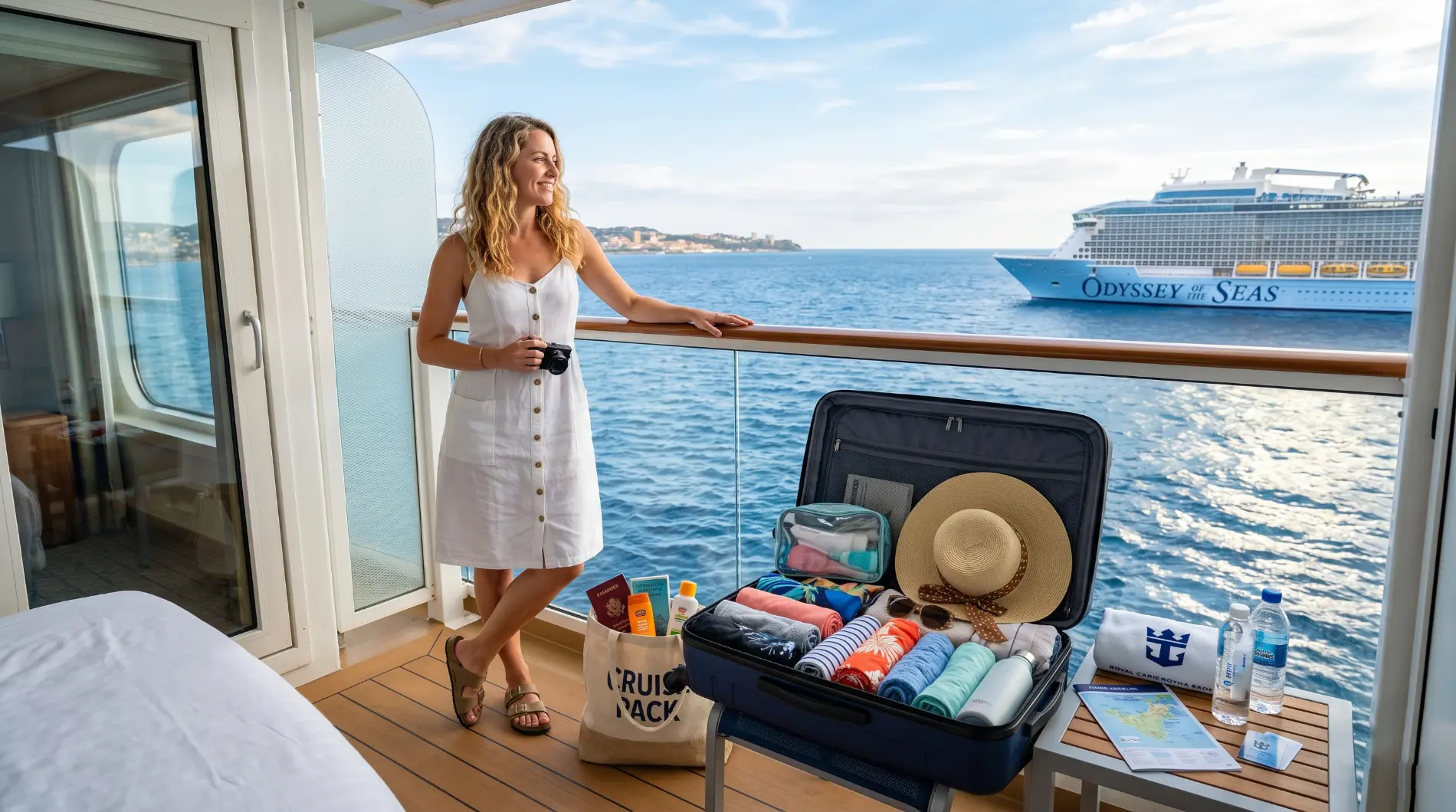
A cruise vacation is unlike any other kind of travel. Your floating hotel moves with you, the ship provides an enormous range of amenities, and the packing equation changes significantly. Get it right and you'll have everything you need without lugging half your wardrobe across every port.
How Cruise Packing Is Different
On a cruise, your luggage stays in your cabin — you're not hauling it between cities. This means you can technically check larger bags without the usual mobility penalty. However, there are two important caveats:
- Your checked bags won't arrive in your cabin until hours after embarkation — always pack a carry-on with essentials for the first day
- Many cruise lines have weight limits for onboard luggage — check your line's policy
Despite the ability to check more, the best cruise packers still think carefully about what they actually need for the trip vs. what they're tempted to bring.
Formal Nights: The Cruise-Specific Packing Consideration
Most major cruise lines have 1-2 formal nights per voyage where elegant attire is expected in the main dining rooms. This is the most significant packing variable for cruise travel.
Women's Formal Options
- A cocktail dress or elegant midi dress (one is usually enough)
- Formal sandals or heels (keep these comfortable — you'll be walking)
- A wrap, shawl, or light jacket for cooler evenings at sea
Men's Formal Options
- A suit or tuxedo (some lines specify black tie; most accept a dark suit)
- A dress shirt and tie
- Dress shoes
Note: Some ships now offer smart-casual formal nights rather than black tie. Check your specific cruise line's dress code before packing.
Casual and Smart-Casual Clothing
The majority of your time onboard is casual. Pack accordingly:
- Casual daywear: shorts, t-shirts, sundresses, and casual pants
- Smart-casual for evenings: nice jeans, polo shirts, casual dresses
- Swimwear: 2-3 pieces — pool and beach days are a constant on most cruises
- Cover-ups for poolside to restaurant transitions
- 1 light layer for air-conditioned areas (dining rooms and theaters are often very cold)
Shore Excursion Gear
Consider the ports you'll be visiting and pack accordingly:
- Comfortable walking shoes: Cobblestones, beaches, and excursion trails all require sturdy, comfortable footwear
- A small daypack: For carrying water, sunscreen, and purchases during port days
- Water bottle: Stay hydrated during excursions (the ship will have drinks, but you won't have the ship during port days)
- Sun protection: Hat, sunglasses, and sunscreen for outdoor excursions
- Waterproof bag or dry sack: For snorkeling, beach days, or water activities
- A copy of your passport or ID: Some ports require ID for shore excursions
What the Ship Already Has
Cruise ships are essentially floating cities. Don't waste packing space on things the ship provides:
- Shampoo, conditioner, and body wash in cabins (quality varies by line)
- Hair dryer in most cabins
- Beach towels available for port days (though some lines charge deposits)
- Pool towels on the pool deck
- Iron or steamer available through guest services or in laundry rooms
- Formal wear rental available on some lines (worth checking for infrequent cruisers)
- Adapters on many ships (ask before assuming)
Cruise-Specific Packing Essentials
Items that are particularly important or useful on cruises:
- A lanyard or small cardholder for your cruise card: Your room key, meal plan, and onboard account are all on one card — you'll use it constantly
- Sea-sickness medication: Even if you've never been seasick, open water can surprise you
- A power strip (non-surge protector, as surge protectors are often prohibited): Cruise cabins typically have very few outlets
- Magnets: Cruise ship walls are magnetic — great for organizing the cabin with over-door hooks and magnetic strips
- A small over-the-door organizer: Cabin bathrooms are tiny; over-door organizers maximize space
What to Keep in Your Carry-On
Your checked bags won't be in your cabin when you first board. Pack a carry-on with:
- Swimwear and sunscreen (for the pool on embarkation day)
- Medications you'll need the first evening
- Valuables (passport, credit cards, cash)
- A change of clothes
- Electronics and chargers
Documents and Money for Cruises
- Passport (required for most international cruises)
- Cruise booking confirmation and tickets
- Travel insurance documents
- Small amounts of cash in local currencies for tipping at ports and small vendors
- Credit card for onboard purchases (most cruise lines use a cashless onboard system)
The Bottom Line
Cruise packing is a balance: you have more luggage flexibility than airline-only travel, but a well-packed bag still makes for a better trip. Plan your formal outfits carefully, pack for your ports, and take advantage of everything the ship provides. Use Packy to build your cruise template once and you'll be ready to sail on any future cruise with minimal prep time.


