
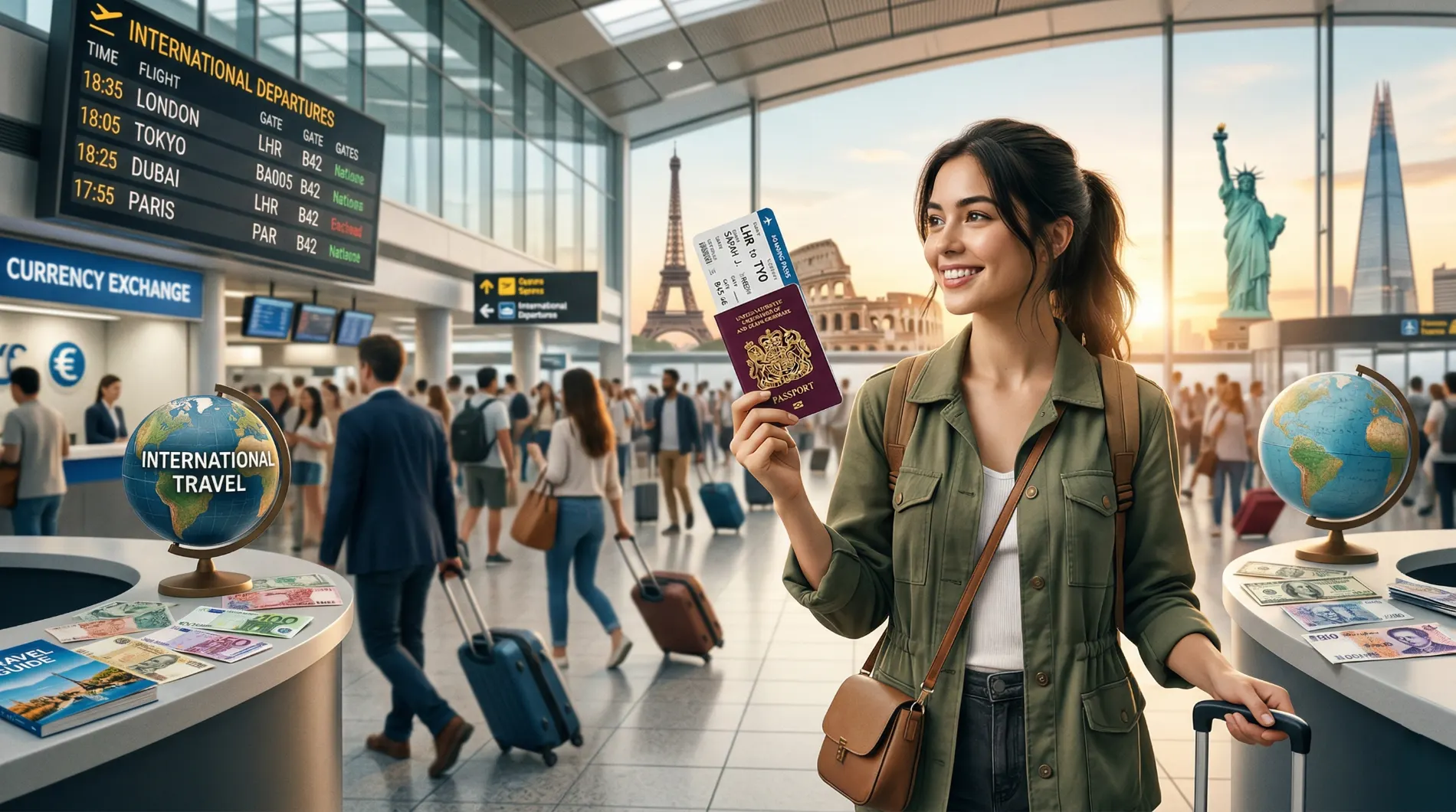
International travel is one of life's great pleasures — and one of its great sources of packing anxiety. The rules change, the plugs are different, and forgetting your adapter in Tokyo is a very different problem than forgetting it in the next city over. This guide covers everything that's different when you pack for a trip abroad.
Documents: The Non-Negotiables
Before you think about a single item of clothing, make sure your documents are sorted. These are the things that can derail your trip entirely if they're wrong.
- Passport: Valid for at least 6 months beyond your return date — many countries require this even if you're only staying a few weeks.
- Visa: Check entry requirements for your destination. Some countries offer visa-on-arrival, others require advance applications. Don't assume.
- Photocopies and digital backups: Photograph your passport, visa, travel insurance, and bookings. Store them in cloud storage and email them to yourself.
- Travel insurance documents: Print or save a copy with the emergency phone number easily accessible.
- Entry cards and customs declarations: Some countries require these to be filled out on the plane. Know the rules before you land.
Power and Electronics
This is where international travelers get caught most often. Every region has different plug shapes and voltages.
- Universal power adapter: A quality universal adapter covers most plug types worldwide. Don't buy the cheapest one — it's worth spending $20-30 on one that won't fry your devices.
- Voltage check: Most modern electronics (laptops, phone chargers) handle 100-240V automatically. Hair dryers and curling irons often don't — check the label before you plug in.
- Portable charger / power bank: Essential for long days of sightseeing when you can't find an outlet.
- Unlocked phone or international SIM: Either unlock your phone for a local SIM card at your destination, or arrange an international plan before you leave.
Money and Currency
Cash still matters in many parts of the world, even where cards are widely accepted.
- Notify your bank: Tell your bank and credit card company you're traveling internationally — or your card may be blocked as suspicious activity.
- Get local currency before you arrive: Airport ATMs exist but often have poor rates. Get a small amount of local currency from your home bank or exchange before landing.
- Use ATMs over currency exchange desks: Bank ATMs generally offer better exchange rates than airport kiosks.
- Carry a no-foreign-transaction-fee card: These save you 2-3% on every international purchase. Worth getting before a big trip.
- Keep emergency cash separate: Stash $50-100 equivalent in local currency somewhere other than your main wallet.
Security Rules: TSA vs. the Rest of the World
If you're flying internationally from the US, TSA rules apply on departure. But when flying internationally from other countries, rules may differ:
- The 100ml / 3.4oz liquid rule applies in most international airports (EU, UK, Australia, etc.) — but enforcement varies.
- Some countries have stricter rules about certain items: medications, food, electronics.
- Laptops and large electronics may need to be removed from bags in security at some airports, even if your home airport doesn't require it.
- Always check the specific rules of your departure and transit airports if you're connecting internationally.
Health and Medications
International travel adds a health layer that domestic trips don't have.
- Prescriptions: Carry enough medication for your entire trip plus extra. Bring a copy of your prescription in case you need a refill abroad.
- Vaccinations: Check if your destination requires any vaccinations. Yellow fever, for example, is required for entry to some countries.
- Travel health kit: Include antidiarrheal medication, oral rehydration salts, and something for stomach issues — food and water quality varies internationally.
- Jet lag prep: Melatonin and an eye mask help when crossing multiple time zones.
What Changes About Clothing Choices
International destinations vary enormously in culture, climate, and dress expectations.
- Modest clothing for certain destinations: In many parts of the Middle East, Southeast Asia, and South Asia, covering shoulders and knees is expected — especially at religious sites.
- Climate-appropriate layers: If you're crossing hemispheres or visiting multiple climate zones, your packing needs to account for temperature swings.
- A lightweight scarf or sarong: One of the most versatile international travel items. It covers up at religious sites, keeps you warm on cold flights, and doubles as a beach wrap.
Customs and What You Can't Bring
Every country has different rules about what can cross its borders. Common restricted items include:
- Fresh food, produce, and meat (particularly strict in Australia, New Zealand, and the US)
- Certain medications that are prescription-only in some countries but illegal in others
- Large amounts of cash (usually above $10,000 equivalent must be declared)
- Certain electronics or drones in some countries
When in doubt, check the customs authority website for your destination country before you pack.
Build Your International Packing List
International trips have so many more variables than domestic travel. Using a tool like Packy to build a destination-specific checklist means you're not starting from a blank page every time. You can add international-specific items as a standard section of your list and never leave home without your adapter again.
Final Checklist Before You Leave
- Passport valid for 6+ months
- Visa arranged if required
- Digital copies of all documents
- Universal adapter packed
- Bank and cards notified
- Travel insurance confirmed
- Local currency secured
- Prescriptions with enough supply


