
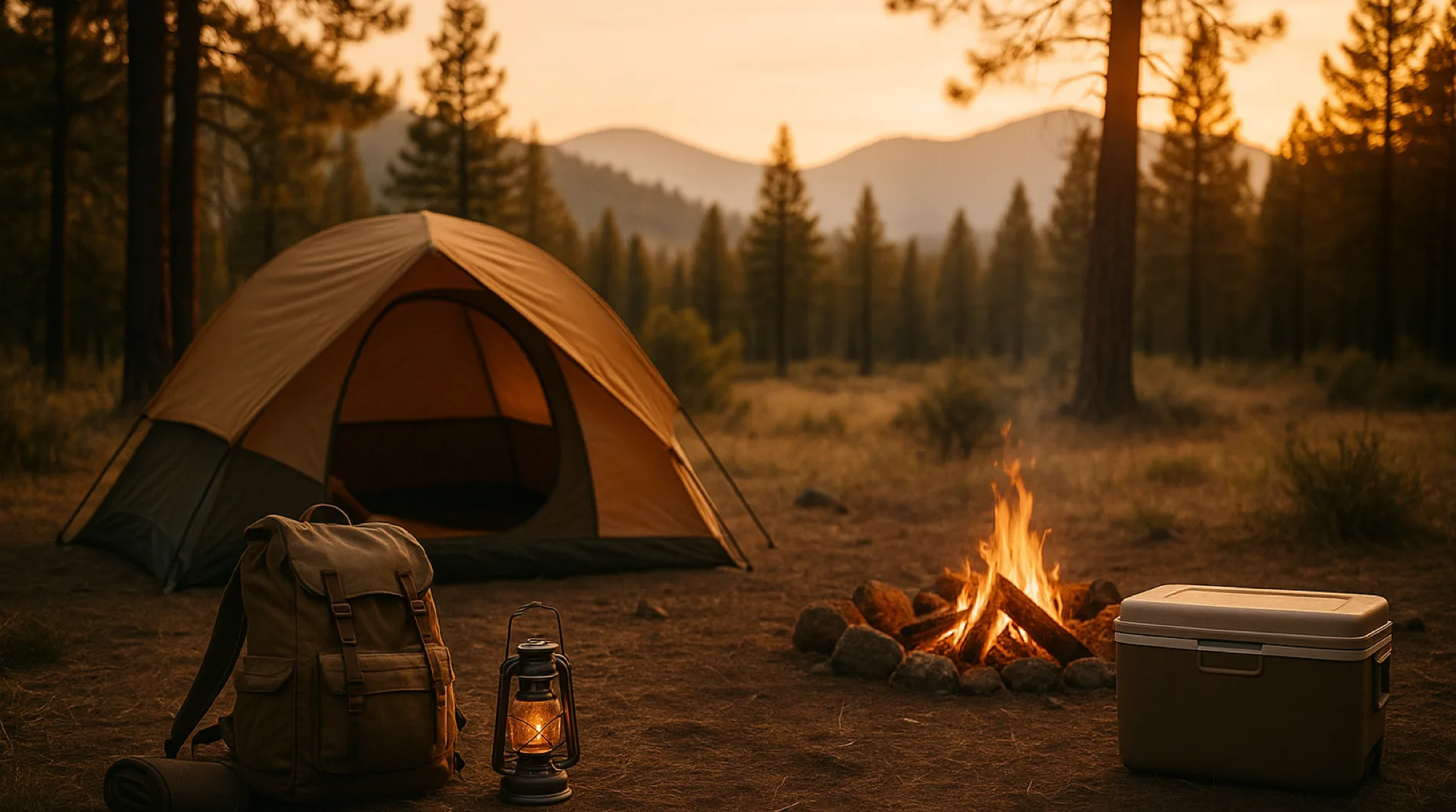
A good campsite needs almost nothing — but the difference between a great night under the stars and a cold, sleepless one usually comes down to a handful of items. Here's exactly what to pack for camping, organized by system so nothing gets left behind.
First, What Kind of Camping?
The list changes with how you get to your site and how much you can carry:
- Car camping: You drive to the site and unload. Weight barely matters — bring comfort items, a cooler, real chairs.
- Backcountry / hike-in: You carry everything on your back. Every gram counts — lightweight, multi-purpose gear only.
- Campground vs. wild camping: Campgrounds often provide toilets, water taps, and fire rings. Wild sites provide nothing — plan to be fully self-sufficient.
The four systems below apply to all of them. Scale up or down based on your trip.
1. Shelter
- Tent sized one person larger than your group (a "2-person" tent is tight for two adults)
- Footprint or groundsheet to protect the tent floor
- Tent stakes and guylines — bring spares, they bend and disappear
- Mallet for hard ground (car camping)
- Tarp for extra rain cover or shade over the cooking area
2. Sleep System
This is where most first-time campers under-pack — and pay for it at 3 a.m. The ground pulls heat out of your body all night.
- Sleeping bag rated for the lowest temperature you expect, with margin
- Sleeping pad — not optional. It's insulation from the cold ground as much as cushioning. Check the R-value for cold trips.
- Pillow — an inflatable camp pillow, or a stuff sack filled with clothing
- Extra blanket or liner for cold nights
3. Camp Kitchen
- Stove and fuel — check you have enough fuel for the whole trip, plus a little
- Lighter and waterproof matches (two sources of fire, stored separately)
- Pot, pan, and a spork or utensils
- Plates, bowls, mugs — one per person
- Sharp knife and small cutting board
- Cooler with ice for car camping; bear canister or hang bag where wildlife requires it
- Water: bring it or bring a way to treat it — filter, purification tablets, or boil
- Biodegradable soap, sponge, and a quick-dry towel
- Trash bags — pack out everything you bring in
4. Clothing — Pack by Layer
Temperatures swing hard between midday sun and a clear night. Layering lets you adjust instead of carrying one bulky jacket.
- Base layer: moisture-wicking merino or synthetic — never cotton next to skin for cold or wet weather
- Mid layer: fleece or a light down jacket for warmth
- Outer shell: waterproof, windproof jacket — even if the forecast looks clear
- Warm hat and gloves — nights get colder than people expect
- Sturdy closed shoes plus camp sandals for around the site
- Wool or synthetic socks — bring more than you think you need
- Swimwear if there's water nearby
5. Light, Tools, and Safety
- Headlamp (hands-free beats a flashlight) plus a lantern for the table — and spare batteries
- First aid kit with blister care, antiseptic, painkillers, and any personal medication
- Multi-tool or knife
- Duct tape and cord — repairs everything from tents to boots
- Insect repellent and sunscreen
- Power bank to keep a phone charged for maps and emergencies
- Map, compass, or downloaded offline maps if you're hiking from camp
The Small Things People Always Forget
None of these are dramatic — which is exactly why they get left at home:
- A camp chair and a way to sit comfortably
- Toilet paper and a trowel for wild sites
- Hand sanitizer and wet wipes
- A dry bag or extra zip bags to keep electronics and matches dry
- Earplugs (campgrounds and wind are louder than you'd think)
- Cash for campground fees, firewood, or showers
- A book, cards, or anything for downtime without signal
Food and Meal Planning
- Plan each meal before you leave and pack ingredients per meal — it stops you from over- or under-packing food
- One-pot meals minimize cleanup and fuel use
- Bring more snacks than you expect; being outdoors burns through them fast
- Store food securely overnight — in a cooler in the car, or a bear canister where required
Leave No Trace
- Pack out all trash, including food scraps and tea bags
- Use established fire rings and follow local fire bans — check before you go
- Keep soap and washing well away from streams and lakes
- Leave the site cleaner than you found it
Build Your Camping Checklist
Camping rewards a reusable list more than almost any other trip — the core gear barely changes, so once you have a solid template you only adjust for season and length. Use Packy to build your camping checklist once, then tweak it for each trip and tick items off as you load the car or pack the bag. No more discovering the missing tent pole at the trailhead.


