
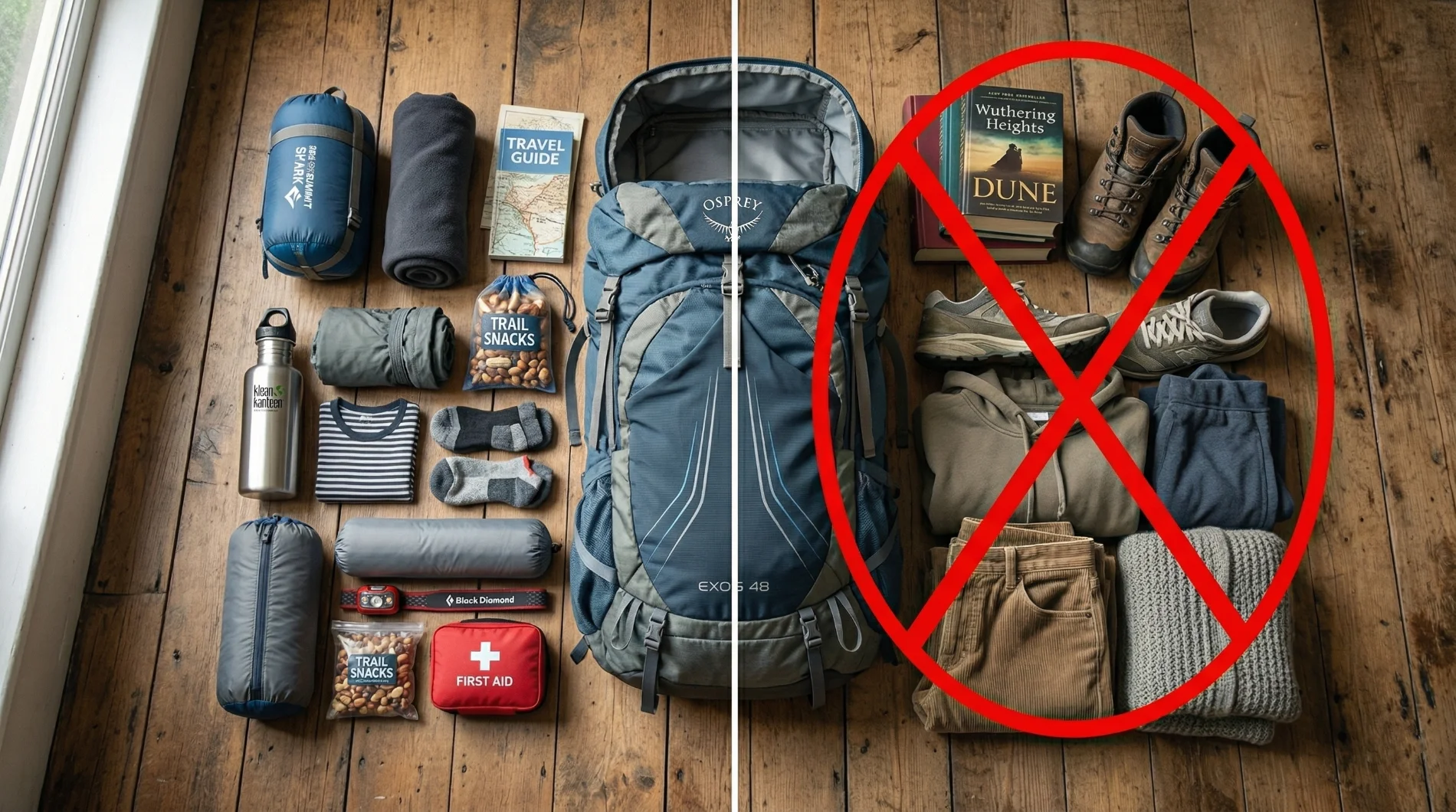
Backpacking is the ultimate test of your packing philosophy. Everything you own is on your back, and every extra kilo slows you down, wears you out, and costs you freedom. This guide will help you pack exactly what you need — and ruthlessly cut the rest.
What Makes Backpacking Different
Unlike a suitcase trip where a porter or a car handles your bag, backpacking means your bag is always with you. It goes on public buses, up hostel stairs, through crowded markets, and onto overnight trains. The lighter it is, the better your experience will be — full stop.
The goal isn't to see how little you can bring. It's to bring exactly enough to travel comfortably, handle unexpected situations, and not exhaust yourself lugging half your wardrobe across a continent.
Choosing Your Pack
Your backpack is your most important piece of gear. For most backpacking trips:
- 40-50L is the sweet spot for 1-4 week trips. Big enough to carry what you need, small enough to avoid overpacking.
- A daypack (15-20L) is essential for day trips while your main pack is stored at the hostel.
- Look for a bag with a hip belt to transfer weight from your shoulders to your hips — crucial for long days.
- A built-in rain cover or a separate one is worth having.
The Ultralight Clothing Strategy
Clothing is where backpackers add the most unnecessary weight. The goal is a minimal, versatile wardrobe that you can wash and rewear throughout your trip.
The Core Wardrobe (Warm / Temperate Climate)
- 3 t-shirts or tops (merino wool or synthetic — not cotton)
- 1 long-sleeve layer
- 2 pairs of pants or shorts (one can double as swimwear)
- 5-6 pairs of underwear (merino or quick-dry synthetic)
- 3-4 pairs of socks
- 1 lightweight packable jacket or rain shell
- 1 pair of versatile walking shoes or trail runners
- 1 pair of flip flops or sandals (hostel showers, beaches)
Add for Cold / Variable Climates
- 1 fleece or midlayer
- 1 pair of thermal leggings
- A warm hat and gloves (lightweight)
Weight Targets to Aim For
As a general guide:
- Under 7kg total: Ultralight backpacking — you'll barely notice it
- 7-9kg: Comfortable for most people for extended trips
- 10-12kg: Manageable but you'll feel it after a long day
- Over 12kg: Start cutting things
Weigh your bag before you leave. Most people are surprised how quickly it adds up.
Toiletries for Backpackers
Keep this section brutally minimal:
- Solid shampoo bar (replaces shampoo and sometimes conditioner)
- Solid or travel-size soap
- Deodorant (solid or travel size)
- Sunscreen (buy locally if possible — it's available everywhere)
- Toothbrush and toothpaste
- Small microfiber towel (hostels often charge for towels)
- Basic first aid: blister plasters, painkillers, antidiarrheal, antiseptic wipes
Tech and Gear Essentials
- Smartphone (camera, maps, translation, everything)
- Universal power adapter
- Portable charger / power bank
- Lightweight laptop or tablet (only if truly needed)
- Headlamp (indispensable for hostels and early morning travel)
- Padlock for hostel lockers
- Packing cubes (they make living from a backpack dramatically easier)
The Laundry System
The reason you don't need 2 weeks of clothes for a 2-month trip is laundry. It's available everywhere — laundromats, hostels with machines, or hand-wash in the sink.
- Pack a small bar of travel laundry soap or a bag of powder detergent
- Quick-dry fabrics dry overnight when hung
- Plan a laundry day every 3-5 days
- In many cheap destinations, you can pay a few dollars to have laundry done for you by weight
What to Leave Home
The things most first-time backpackers regret packing:
- More than 2 pairs of shoes
- A full-size towel
- Hair dryer or straightener
- Jeans (heavy, slow to dry)
- Books (use a Kindle or phone)
- "Nice" clothes for a night out you might never have
- Duplicate toiletries
Buy on the Road, Not Before
One of the great secrets of experienced backpackers: you can buy things abroad. If you forgot something or need more of something, you can almost certainly find it locally — often cheaper. This reduces the need to prepare for every possible scenario before you leave.
Plan Your List, Not Your Packing
Use Packy to build your backpacking list before you start throwing things into your bag. Seeing everything listed out helps you spot duplicates, identify gaps, and make deliberate choices rather than panic-packing the night before you leave.


