
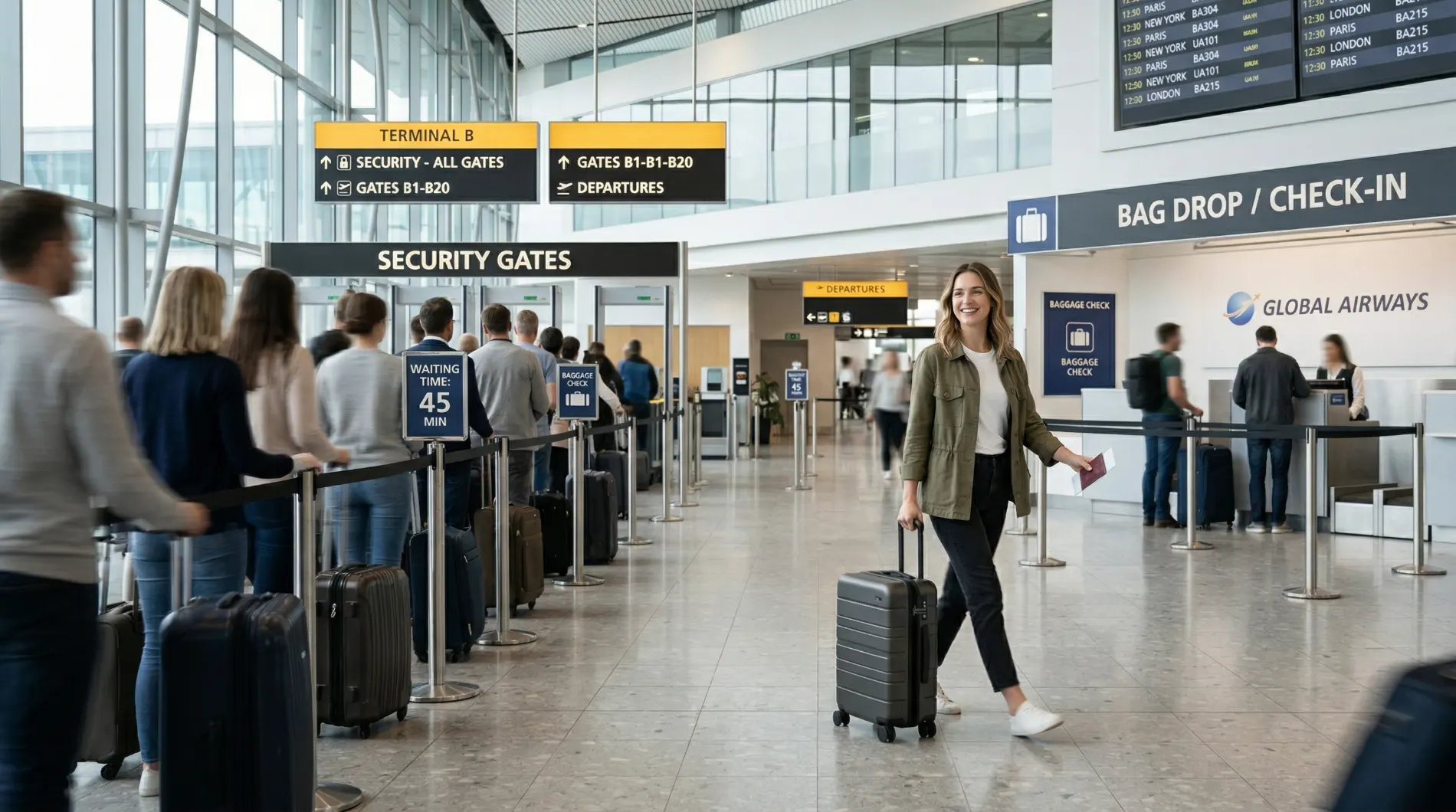
Carry-on only travel is more than a packing strategy - it's a mindset that prioritizes freedom, flexibility, and experiences over stuff.
Why Go Carry-On Only?
The benefits compound with every trip:
- Save money: No checked bag fees ($35-70 per bag, per flight)
- Save time: Skip the baggage carousel (20-45 minutes per flight)
- Reduce stress: Zero risk of lost or delayed luggage
- Increase flexibility: Take any connecting flight or spontaneous trip
- Travel lighter: Carry less, experience more
Know the Rules: Airline Size Limits
Most airlines allow carry-on bags around 22" x 14" x 9" (56 x 36 x 23 cm). However, limits vary:
US Domestic Airlines
| United, Delta, American | 22" x 14" x 9" |
| Southwest | 24" x 16" x 10" (more generous) |
| Spirit, Frontier | 22" x 18" x 10" (but fees apply!) |
International Airlines
| Ryanair (strict!) | 21.7" x 15.7" x 7.9" |
| EasyJet | 22" x 17.7" x 9.8" |
| Asian airlines (vary) | Often 21.5" x 13.8" x 9.8" |
Pro tip: If traveling on multiple airlines, pack for the smallest limits you'll encounter.
TSA Liquid Rules Explained
The 3-1-1 rule is straightforward once you understand it:
- 3.4oz (100ml): Maximum container size for liquids
- 1 quart-size bag: All liquids must fit in one clear, zip-top bag
- 1 bag per person: One liquids bag allowed per passenger
What Counts as a Liquid?
More than you'd think: toothpaste, sunscreen, lip gloss, mascara, hair gel, peanut butter, hummus. If it spreads or smears, it's likely considered a liquid.
TSA-Free Alternatives
- Solid shampoo and conditioner bars
- Bar soap instead of body wash
- Powder sunscreen
- Solid perfume or cologne
- Stick deodorant (typically allowed)
Choosing the Right Carry-On Bag
The perfect carry-on depends on your travel style:
For Maximum Organization
Hard-shell spinners with multiple compartments work well for organized packers. They stand upright and protect fragile items.
For Maximum Flexibility
Soft-sided bags can squeeze into overhead bins and under seats. Backpack-style carry-ons offer hands-free mobility.
Key Features to Look For
- Meets airline size limits for your routes
- Lightweight (every pound counts toward weight limits)
- Quality zippers and materials
- Comfortable handles/straps
- Easy-access pockets for documents and electronics
Packing Your Carry-On: A System
Layer 1: Bottom
Place shoes at the bottom (in shoe bags). Fill inside shoes with socks or small items.
Layer 2: Clothes
Place packing cubes with rolled clothes next. Heavier items toward the back (wheel side) for balance.
Layer 3: Toiletries & Accessories
Toiletry bag and accessories on top for easy access at security.
Outer Pocket
Keep phone charger, snacks, book, and anything needed during flight easily accessible.
The Personal Item Advantage
Most airlines allow a "personal item" in addition to your carry-on. Maximize this:
- Large backpack or tote (roughly 18" x 14" x 8")
- Keep electronics, documents, and valuables here
- Pack a jacket that doubles as blanket
- Include entertainment and snacks for the flight
When Carry-On Only Won't Work
Be realistic about when you need to check a bag:
- Skiing, scuba diving, or other gear-heavy activities
- Extended trips to extreme climates
- Formal events requiring multiple outfit changes
- Bringing gifts or shopping extensively
Even then, you might ship gear ahead or rent at your destination rather than check bags.


